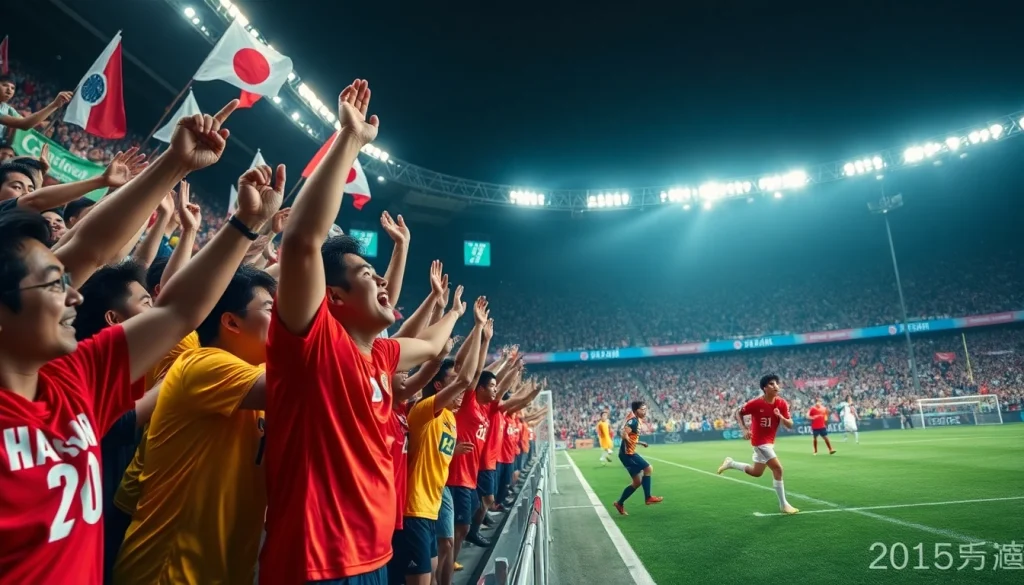

Introduction to Vô Địch Quốc Gia Nhật Bản Hôm Nay
The Vô Địch Quốc Gia Nhật Bản, known internationally as the J1 League, is not just a football league; it is a cornerstone of Japanese sports culture and a beacon of professional football in Asia. Established in 1992, the league has evolved significantly over the years, setting a standard for competitive play that other Asian leagues aspire to emulate. Today, it features some of the most talented players and fully engages a passionate fan base, making it essential for enthusiasts to stay updated on the latest developments. As you explore the current state of the league, you can find comprehensive insights into the vô địch quốc gia nhật bản hôm nay and its significance in the broader context of Asian football.
Overview of the J1 League and Its Significance
The J1 League is the top tier of professional football in Japan, renowned for its high-quality matches and intense competition. It has become a prominent platform for showcasing local talent and attracting international players, thus elevating the overall standard of football in Asia. The league is structured to ensure the highest levels of competitive integrity, with 20 clubs competing in a round-robin format. Each season, teams play 38 matches, battling both at home and on the road, culminating in a true test of skill, strategy, and endurance.
Key Details About the Current Season
The current season of the J1 League showcases a mix of established teams and emerging clubs, all vying for the coveted championship title. Fans are particularly excited about the performances of teams like Kawasaki Frontale and Yokohama F. Marinos. Key matches in this season have already seen thrilling displays of football, with clubs demonstrating impressive strategies and skillful execution. Tracking the current standings, player performances, and match outcomes is crucial for fans and analysts alike.
Why Fans Should Follow the League Today
There are numerous reasons fans should pay close attention to the J1 League. The league not only serves as entertainment but also embodies the spirit of Japanese sportsmanship and community. With its rising popularity and the influx of international talent, the J1 League has become a significant focus of interest, offering fans the chance to witness high-caliber football that can often rival leagues in Europe and South America. Additionally, the league’s competitive edge ensures that every matchday is filled with excitement and the potential for surprising results.
History of Vô Địch Quốc Gia Nhật Bản
The Establishment of the J.League in 1992
The J.League was officially launched in 1992, marking a pivotal moment in the evolution of Japanese football. Prior to its inception, football in Japan was largely amateur and disorganized. The establishment of the league was driven by the desire to professionalize the sport and enhance its international competitiveness. The league quickly garnered attention and approval, leading to increased investment and sponsorships, which have been critical in its growth.
Evolution of the Competition Over the Years
Since its inception, the J.League has undergone several transformations to adapt to the changing landscape of global football. Over the years, the competition has expanded, both in terms of the number of teams and the level of talent. The introduction of the J2 and J3 Leagues has allowed for a more structured development of clubs at various levels, creating a robust pyramid that nurtures future stars.
Major Milestones and Achievements
The J.League has achieved numerous milestones that have solidified its place as one of Asia’s premier football competitions. Notably, its clubs have performed admirably on the continental stage, with teams like Urawa Red Diamonds winning the AFC Champions League multiple times. These achievements have not only elevated the profile of Japanese football but have also inspired a new generation of players and fans.
Rules and Format of the League
Understanding the Tournament Structure
The league format is designed to ensure competitiveness and fairness. The 20 participating clubs compete in a single round-robin league format, where every team faces each other twice, once at home and once away. The top teams at the end of the season qualify for the AFC Champions League, while the bottom clubs face relegation to the J2 League.
Regulations Governing Team Competitions
Each match in the J1 League must adhere to strict regulations set forth by the Japan Football Association (JFA). These include guidelines on player conduct, match officiating, and safety measures during matches. Clubs are also required to maintain a certain number of domestic players in their squads, promoting local talent.
Points System and Playoff Seeding
Points in the J1 League are awarded based on match outcomes: three points for a win, one point for a draw, and no points for a loss. The accumulation of these points throughout the season determines the rankings of the clubs. Playoffs are held for the teams that qualify for the Asian competitions, giving them an additional incentive to perform well in the league.
Importance of Vô Địch Quốc Gia Nhật Bản in Football
Impact on Asian Football Development
The J1 League is a crucial player in the development of football across Asia. Its professional structure serves as a model for other leagues, encouraging them to adopt similar practices that enhance competition and player development. This impact extends beyond Japan, as neighboring countries often look to the J.League for inspiration in building their own football infrastructures.
International Recognition and Influence
Globally, the J1 League has been recognized for its competitive nature and has established partnerships with several high-profile leagues around the world. These collaborations include player exchanges and friendly matches that elevate the league’s status and spread its influence across borders.
Lessons for Other Countries’ Leagues
The evolution of the J1 League offers valuable lessons for other national leagues looking to grow and professionalize. Core strategies such as investing in youth development, establishing strong sponsorship deals, and creating fan engagement initiatives can be integral to achieving noticeable success.
Top Clubs in Vô Địch Quốc Gia Nhật Bản
Profiles of Prominent Teams: Kawasaki Frontale & Yokohama F. Marinos
Kawasaki Frontale has emerged as a powerhouse in recent years, showcasing a remarkable consistency in performance by clinching multiple league titles. Their attacking style and solid defense have made them a formidable opponent. On the other hand, Yokohama F. Marinos, with a storied history and a legacy of success, continues to contribute to the league’s competitive landscape through strategic gameplay and experienced coaching.
Achievements of Urawa Red Diamonds
Urawa Red Diamonds are often regarded as one of the most successful clubs in the J.League’s history. Their accolades include multiple J.League championships and notable triumphs in the AFC Champions League, which have not only boosted their profile but also that of Japanese football. The club enjoys a massive following, reflecting the deep-seated passion for football in the region.
Current Performance Trends and Rankings
The 2026 season has seen dynamic changes in club performances. Current rankings reveal an exciting race for the championship, with several clubs displaying improved form and tactical innovations. Every match contributes to the ever-changing dynamics of the league, ensuring that the fan engagement remains at an all-time high.